/
Infrastructure

Hydro Alps Lab experimental and digital infrastructures

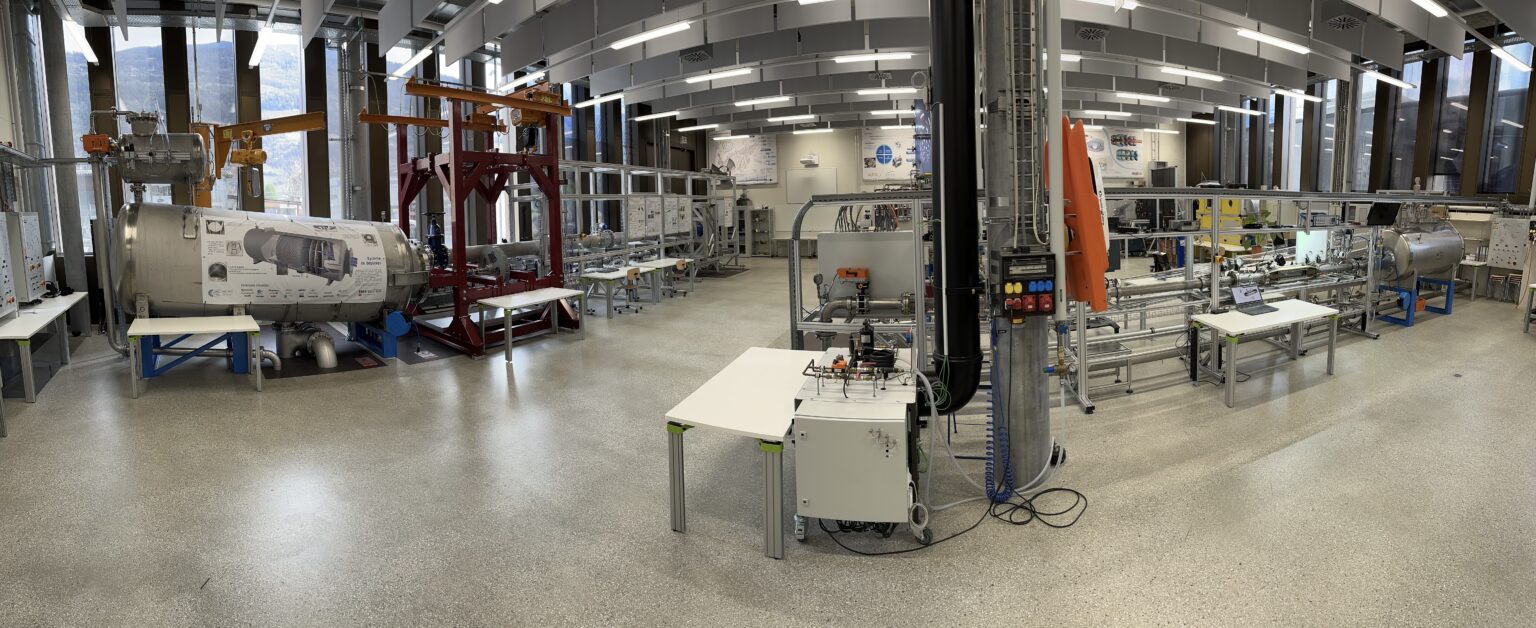
Our laboratory infrastructure and advanced digital resources guarantee high-precision research and rigorous field validation.

Cutting-edge tools for research

The Hydro Alps Lab boasts first-rate technical and digital resources that are essential to our applied research and the development of innovative hydroelectricity solutions.

These cutting-edge infrastructures, combined with the expertise of our team, guarantee the scientific relevance and experimental validation of all our research, providing our partners with reliable, high-performance solutions.

Equipment

Cutting-edge equipment to understand, test and improve Alpine hydroelectric systems.

Hydraulic test benches
0 +
On-site experimental campaigns
0 +
Advanced digital platforms
0
CPU simulation hours/year
0 +

Experimental infrastructures

Benches/models developed from scratch every year
1 - 2
Laboratory-tested hydraulic machines and systems
+ 0
Experimental projects
> 0

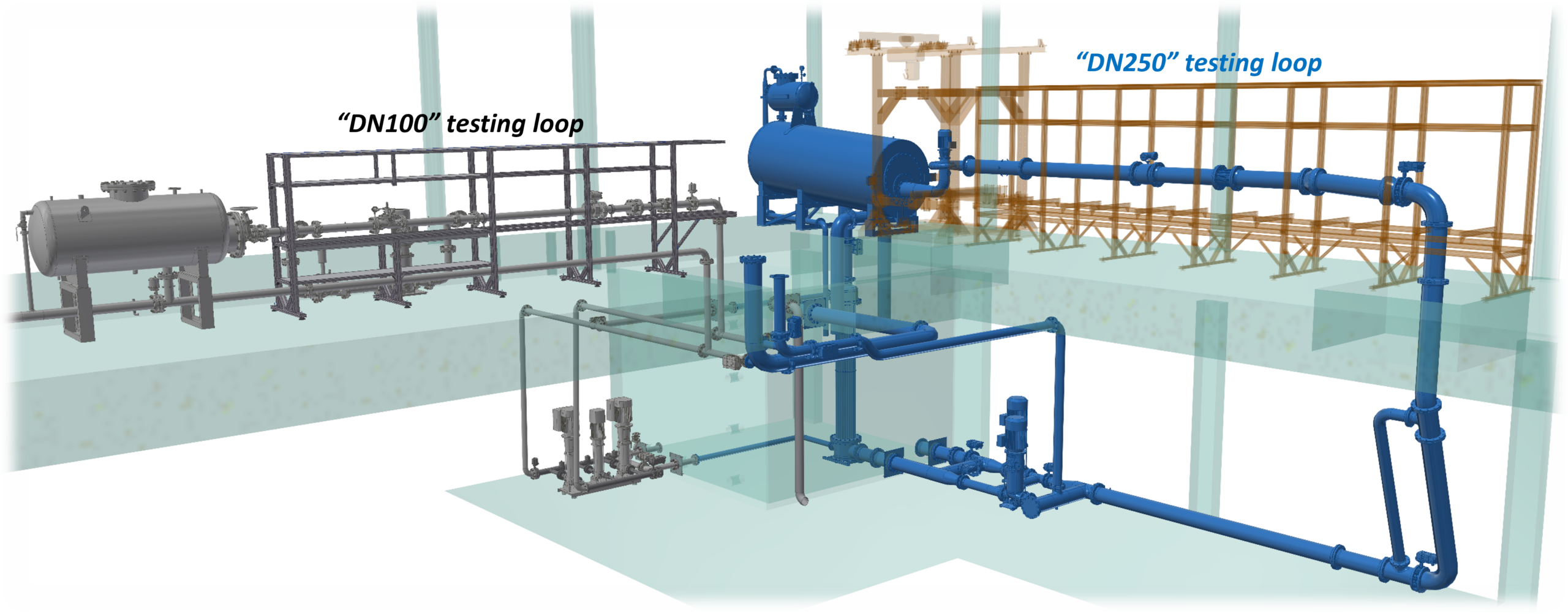
Universal hydraulic test bench

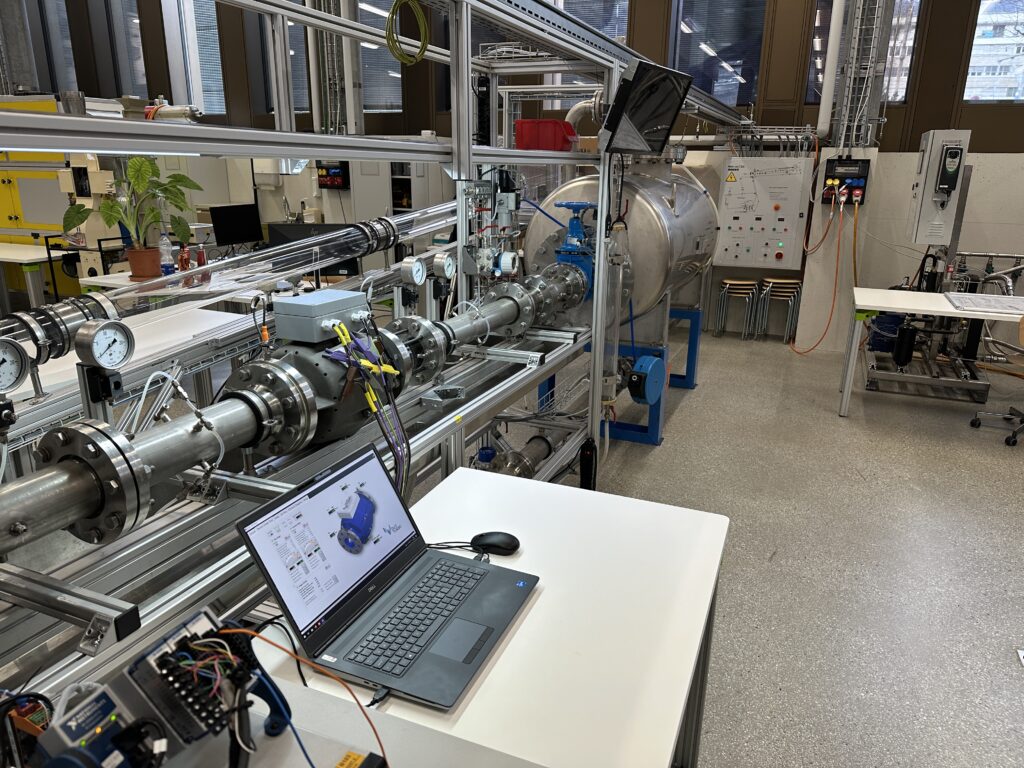
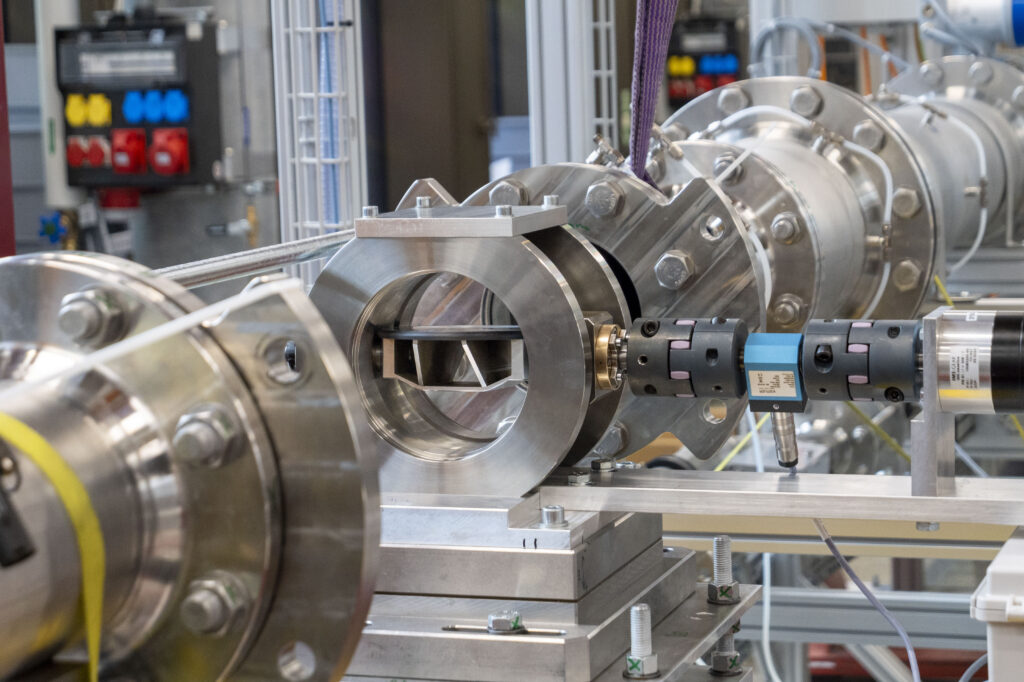
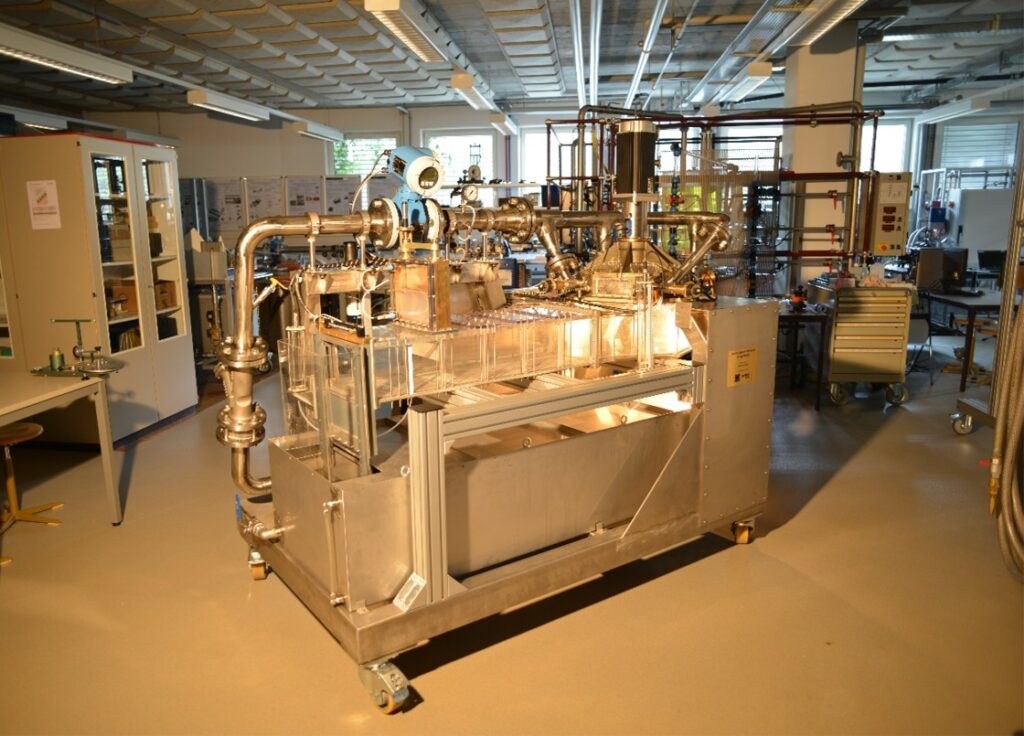
This state-of-the-art facility enables in-depth assessment of the hydraulic performance and hydrodynamic behaviour of various axial and radial turbines, pumps, valves and other hydraulic system components.

Main features
  • DN100« loop: Maximum pressure of 16 bar, maximum flow rate of 120 (136) m3/h.
  • DN250 loop: maximum pressure 16 bar, maximum flow 520 (650) m3/h.
Special features
  • Independent or coupled operation between the two test loops.
  • Bi-directional flow with energy recovery in pump mode.
  • Advanced control for rapid transient testing.
    Degassing via a Venturi and a phase separation system integrated into the pressurisable downstream tank.
  • Built-in automatic control to maintain a constant head or flow rate in the test section.

Pelton test bench with 4 injectors

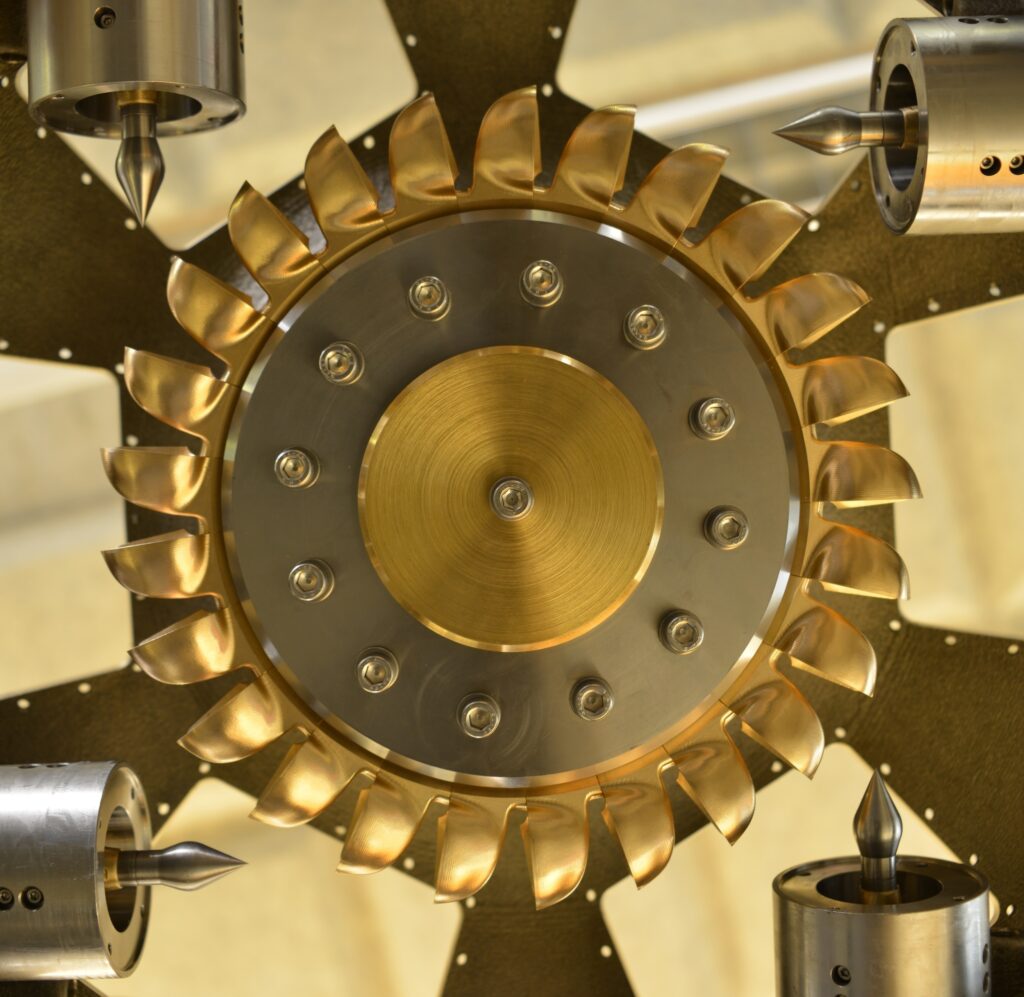
Demonstrator of a complete hydroelectric facility (dam, hydraulic machine, electrical machine, frequency converter and tailrace) equipped with a Pelton turbine with 4 injectors, enabling all aspects of its operation to be studied, including interactions between the impeller and the tailrace.

Main features
  • Nominal flow rate: 5.9 l/s
  • Nominal drop: 35 mWC
  • Rated speed: 1’250 rpm
  • Injection diameter: Φ195 mm
  • Hydraulic power: 2 kW

Cavitation vein

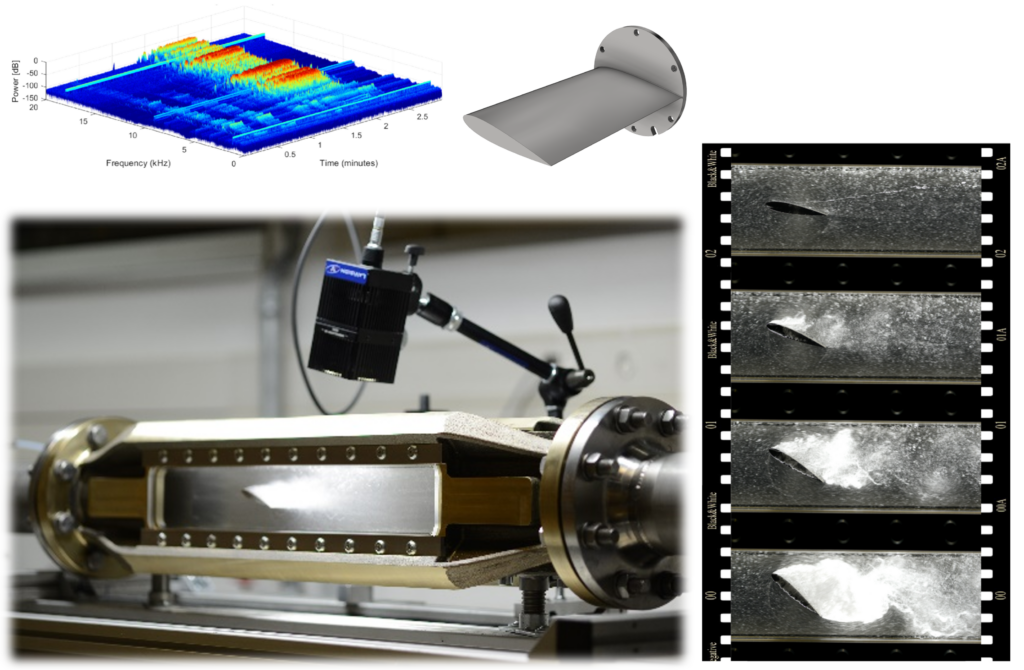
Rectangular test section measuring 80mm x 80mm with a length of 500mm, enabling cavitation to be studied on any hydrodynamic profile. Equipped with a 6-axis force transducer and transparent windows, it enables complete characterisation of the profiles in a controlled environment.

Main features
  • Geometric configuration: integral or Venturi section (40mm x 80mm).
  • Flow speed: 0..25 (50) m/s.
  • Static pressure: -1..5 bar.
  • Angle of incidence: -180..180°.
  • Face distance: 0..10mm.

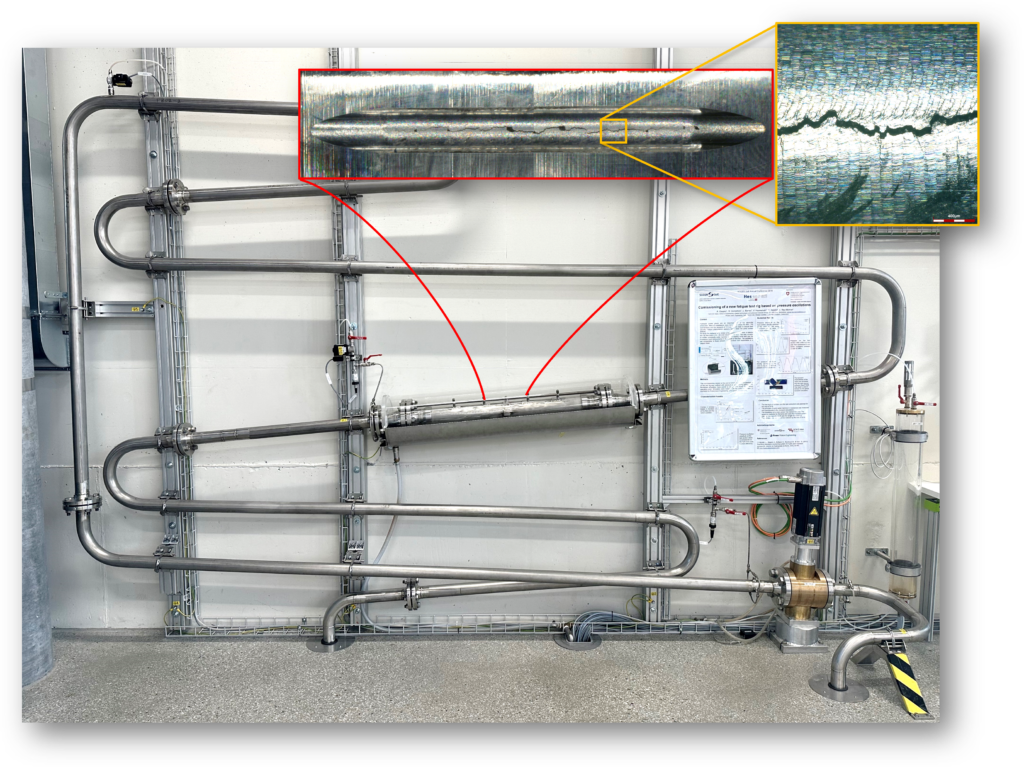
Water hammer test bench

This unique test rig is dedicated to the experimental study of material damage to tubular specimens (e.g. crack initiation and propagation) due to pressure oscillations. It works on the principle of generating cyclic pressure oscillations, controlled in terms of frequency (17.5 Hz) and amplitude (0 to 30 bar), induced by the water hammer effect in a closed-loop circuit.

Main features
  • Maximum flow rate: 15 m3/h.
  • Maximum static pressure: 30 bar.
  • Nominal diameter: 2”.
  • Active length: 35m.

Main applications

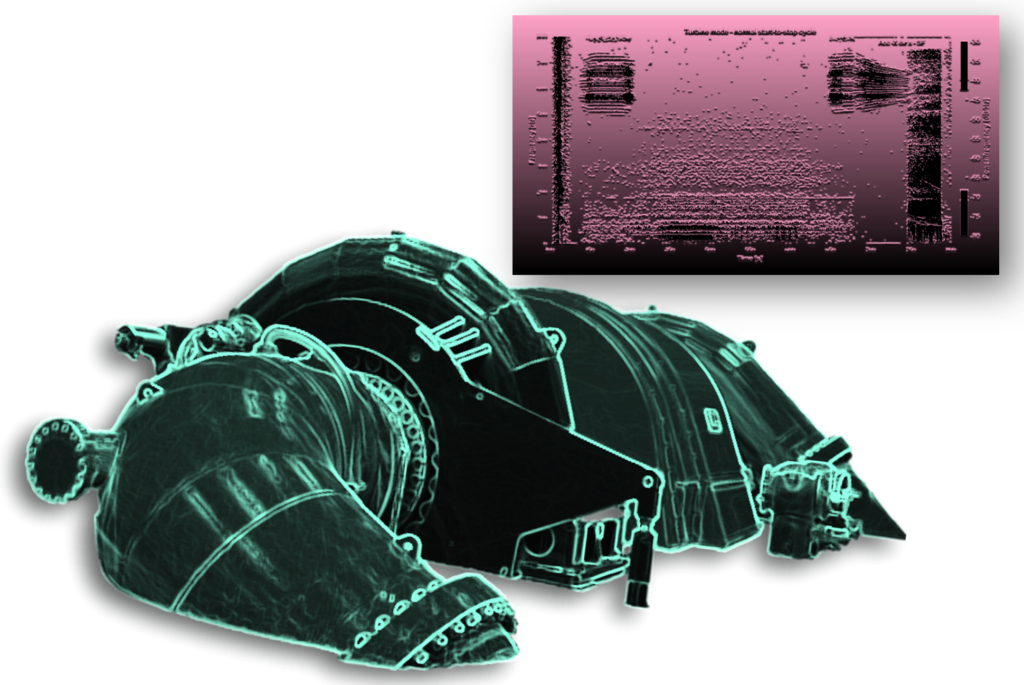
Research into the performance, flexibility and ageing of hydroelectric power stations.

Working with industry to develop and validate new technologies.

Experimental research into hydrodynamic phenomena and energy optimisation.

Multi-physics expertise in understanding complex fluid circulation systems.

Digital infrastructure

Advanced digital platforms
0
CPU simulation hours/year
0
Alpine pilot sites
0
Simulation projects
0 +

Equipment

The digital infrastructure is dedicated to fluid (CFD) and structural (FEM) simulations and to the analysis of data from laboratory or on-site measurement campaigns using machine learning tools.
It consists of: 

2 Dell PowerEdge R7625 HPC servers

Each blade server is equipped with 2 AMD EPYC 64-core processors with 384 GB of RAM, 28.8 TB of storage and 15.3 TB of scratch space. One blade is equipped with 2 NVIDIA L40S GPU cards (48 GB) and the second is equipped with 2 NVIDIA H100 GPU cards (94 GB).

1 Dell PowerEdge R760xs server

This blade server is equipped with 2 Intel Xeon Gold 24-core processors with 256 GB RAM and a total storage volume of 35 TB.

4 Dell Precision 7920 workstations

These workstations are equipped with 2 Intel Xeon processors with RAM ranging from 128 GB to 768 GB and NVIDIA RTX 5000 (16 GB) or 6000 (24 GB) graphics.

Main applications

Assessing the performance of hydraulic machines and components.

Development of advanced models for predicting wear and fatigue of hydraulic components.

Analysis of 3D turbulent and cavitating flows in hydraulic machines.

Concrete projects and strategic partnerships

We work closely with industry to turn research into innovative applications. Discover some of our projects that are shaping the hydropower of tomorrow.

RevHydro
The European RevHydro project is developing innovative flow control solutions (RFC and DFC), an intelligent fish barrier (I-Fish) and a circular economy methodology to modernise existing hydroelectric power stations.
logo-revhydro-horizontally-L
HiDeStor
Revealing the hidden potential of decentralised hydraulic storage in Switzerland
SmallFLEX Goms
Optimising the flexibility of small and medium-sized hydroelectric power stations in the Alps.
Experimental study of the splashing action of a Pelton turbine
HES Master's thesis 25/26
ReHydro
Demonstration of Sustainable Hydropower Refurbishment
ReHydro_Logo_462-136
THALEA
Thalea proposes a compact and transportable underwater platform for a paradigm shift in the maintenance service of hydroelectric plants. It features unrivalled NDT inspection capabilities and robust navigation algorithms to achieve a plant's state blueprint even in murky waters.
thalea-logo