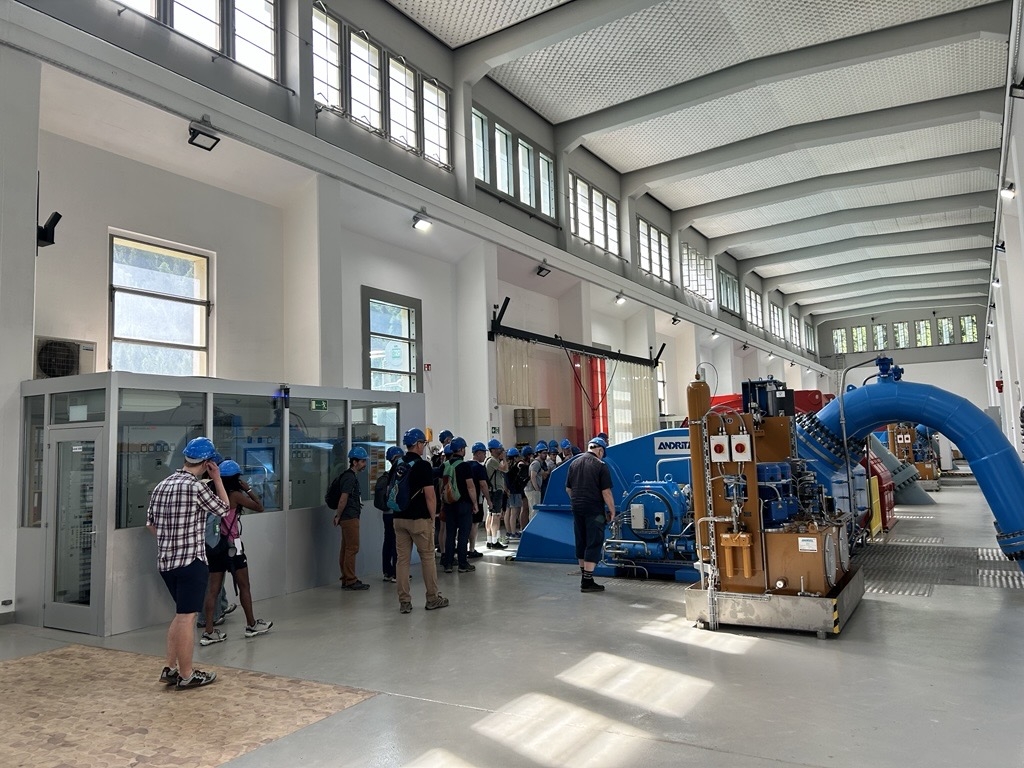
As part of the energy transition, conventional hydropower remains a cornerstone in Switzerland. But what about the residual energy from flows without a head of water? As part of the European project Interreg SHINES, the Hydro Alps Lab team (C. Aviolat, O. Pacot, V. Hasmatuchi) has just finalised a report mapping and assessing the theoretical hydrokinetic potential across the cantons of Valais and Geneva.
Unlike conventional hydroelectric power stations, river-based tidal turbines harness the speed of the currents directly, without the need for major civil engineering works (such as dams or reservoirs).
Key findings: a theoretical potential of 200 GWh/year
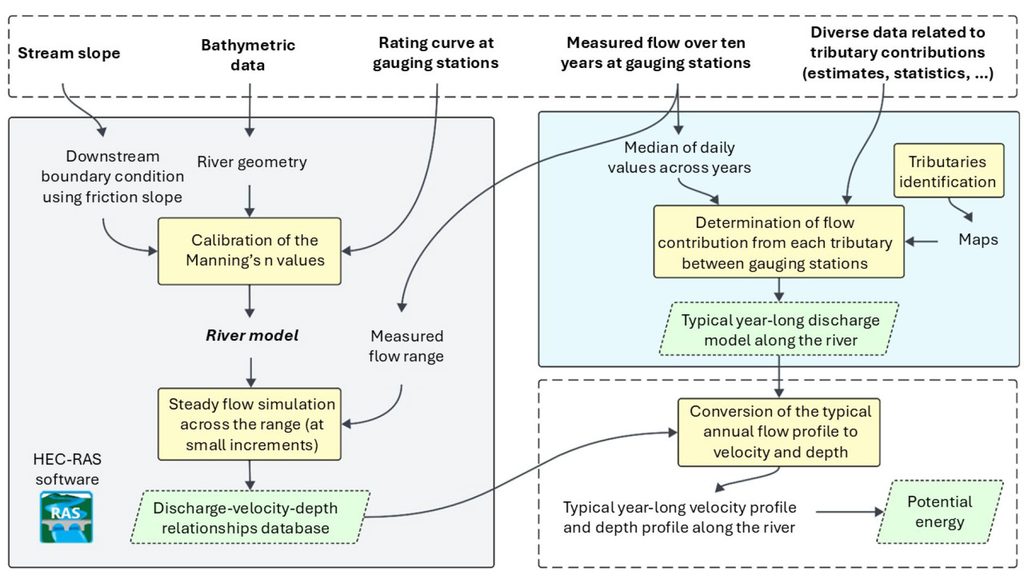
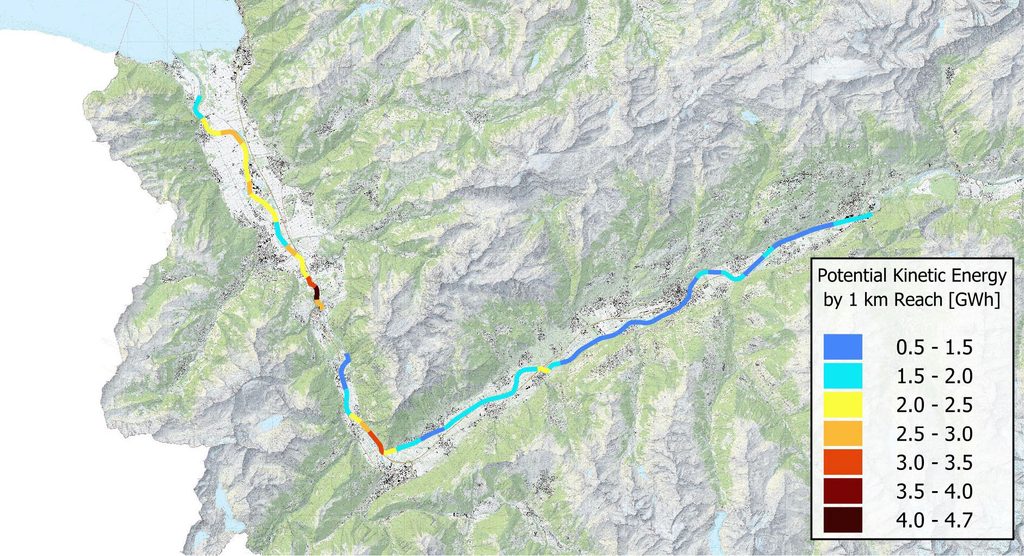
The coupled analysis of hydraulic modelling under HEC-RAS and hydrological data highlight a theoretical overall hydrokinesis potential of around 200 GWh per year across the entire study area. The majority of this resource is concentrated along the natural course of the Valais section of the Rhône, which alone accounts for nearly 160 GWh per year, with particularly favourable areas identified downstream of the Martigny bend and the Lavey complex due to steeper local gradients. The potential of this latter section could, however, be set to change with the completion of the MBR3 project.
In the canton of Geneva, the Rhône offers a hydroelectric potential of around 33 GWh/year, mainly located in the final stretch downstream of the Chancy-Pougny scheme as far as the French border, whilst the Arve has a more modest potential of around 3 GWh per year due to average flow velocities of less than 1 m/s.
A practical tool for farmers
A specific assessment of the artificial canals in Valais confirms their potential, with 2.94 GWh/year spread across 21 potential sections along the Chippis–Rhône headrace, and 1.33 GWh/year identified across two sections of the tailrace of the Lavey power station. These man-made structures offer particularly favourable operating conditions: predictable flow velocities and rates, minimal environmental impact, easy access for maintenance, and direct connections to the electricity grid.
At the same time, the work carried out provides equipment manufacturers with a realistic design framework for Alpine river environments: whilst several natural river sections have favourable flow velocities exceeding 1.2–1.5 m/s, the shallow water depths (often less than 2 metres), together with the management of sediment transport and floating debris, are the key criteria for designing suitable and economically viable machines.
The full report can be viewed here: Shines Report WP2.1.5