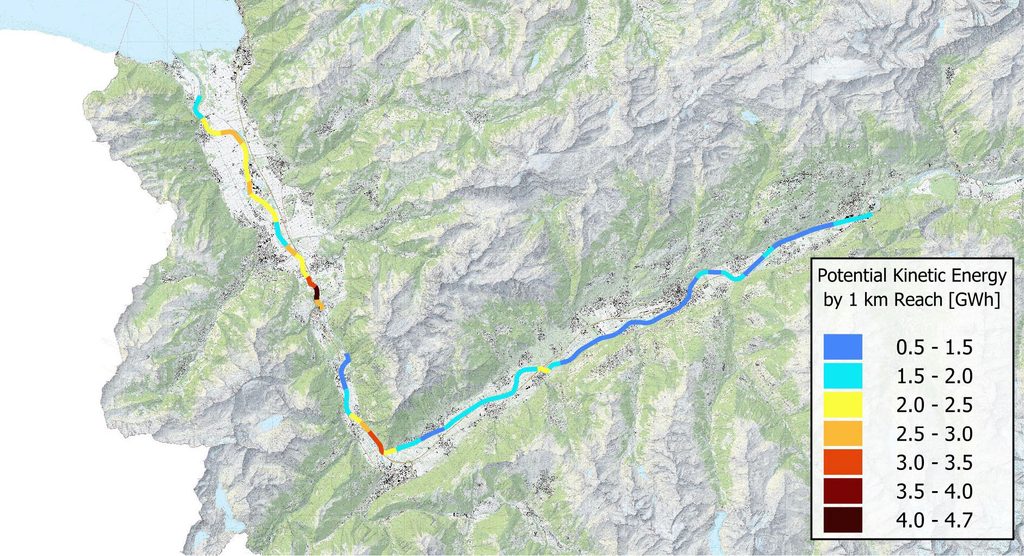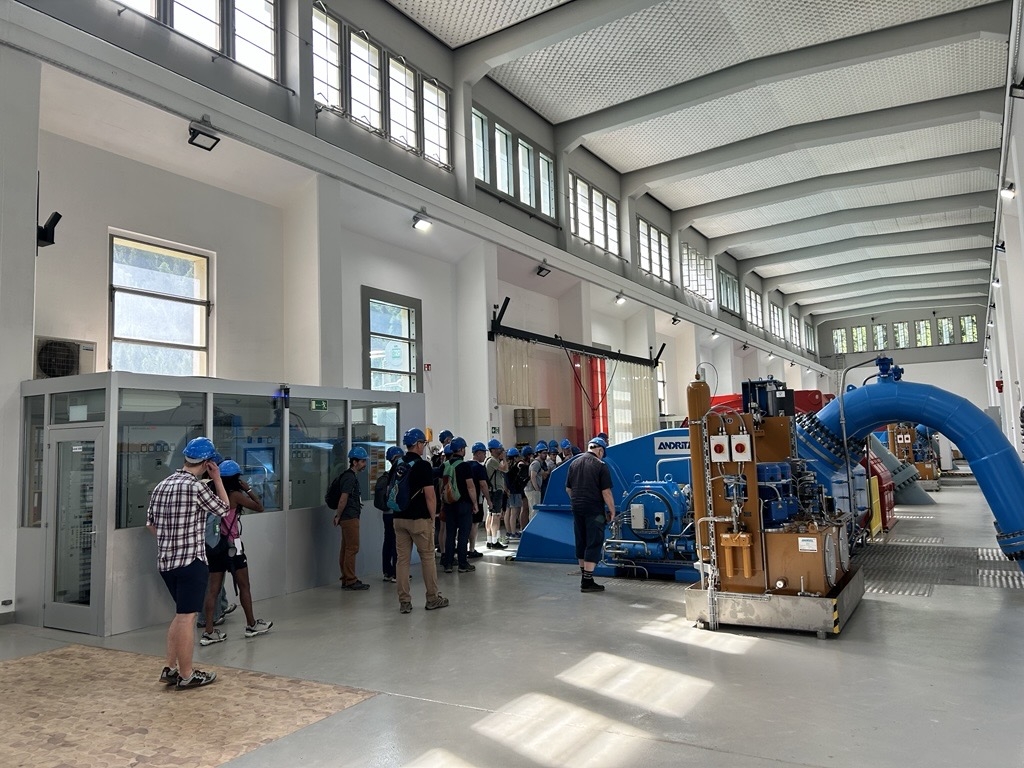
Climate change and increased sediment loads in Alpine catchment areas are accelerating the hydro-abrasive erosion of hydroelectric installations. Faced with this operational challenge, the assessment of wear on Pelton wheels still relies heavily on periodic visual inspections, which require costly production stoppages and reduce the availability of the units.
In a recent study published in Results in Engineering, researchers at the Hydro Alps Lab (as part of Maxime Chiarelli’s PhD thesis, HES-SO Valais-Wallis and ETH Zurich) have taken a crucial step towards overcoming this constraint by establishing the physical foundations for non-intrusive structural health monitoring.
Quantifying wear in real time using dynamic properties
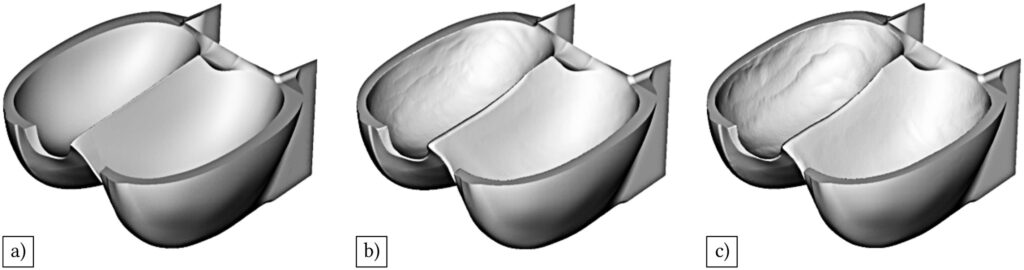
The main aim of this research is to indirectly quantify the current wear stage of a Pelton wheel in operation, without the need for dismantling or interrupting service. By analysing three scale-model prototype wheels small-hydro (1.8 MW) representing different levels of degradation, the researchers observed a systematic shift in the structure’s natural frequencies towards lower values.
These reductions in frequency, which reach as much as -15.75 % for certain families of vibration modes, demonstrate that the wheel’s dynamic behaviour is primarily governed by the loss of structural stiffness at the troughs (particularly at the central separator and the notch) rather than by a simple reduction in mass.
A correlation that can be applied to high-power machines
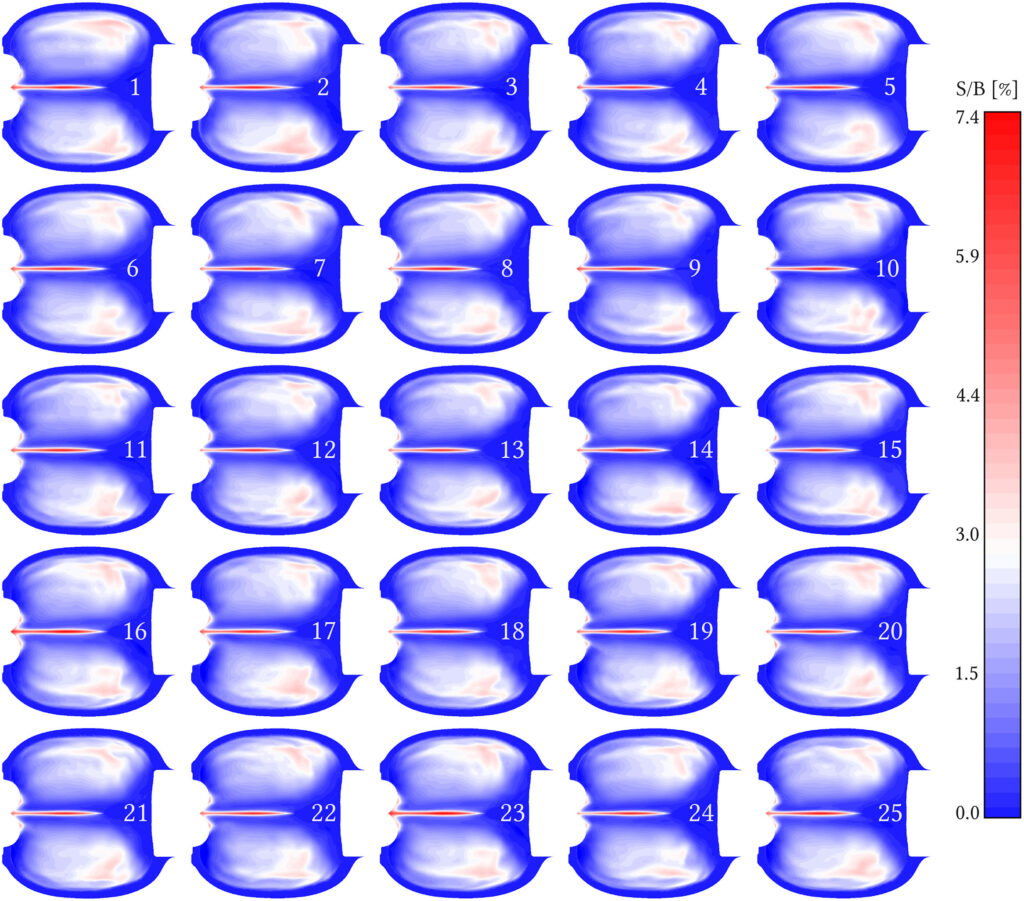
For specialists in structural dynamics, one of the most promising findings of the article lies in the quasi-linear relationship observed between the volume of eroded material and the decline in natural frequencies for the majority of modal families. By continuously monitoring these frequency signatures (using accelerometers or laser vibrometry), it becomes possible to accurately estimate the extent of mechanical degradation of the wheel in real time.
The study also validates the application of geometric similarity laws. It demonstrates that, although natural frequencies decrease as the size of the machines decreases, the frequency shifts caused by erosion remain perfectly detectable using standard measuring instruments on high-power turbines, such as those at the Peccia (TI) and Bieudron (VS) power stations.
The building blocks of future predictive maintenance
Drawing on a rigorous combination of experimental and numerical methods, incorporating high-resolution 3D scanning, experimental modal analysis (EMA) and finite element simulations (FEM), this work does not constitute a model for predicting the residual service life over time, but establishes the essential physical foundation for future predictive maintenance tools. It thus provides operators, researchers and future engineers working on the energy transition with a proven methodology for optimising the management of hydroelectric assets in sedimentary environments.
Read the full article: https://www.sciencedirect.com/science/article/pii/S2590123026030951